
The Science of Yoga and Dancing for Cognitive Function
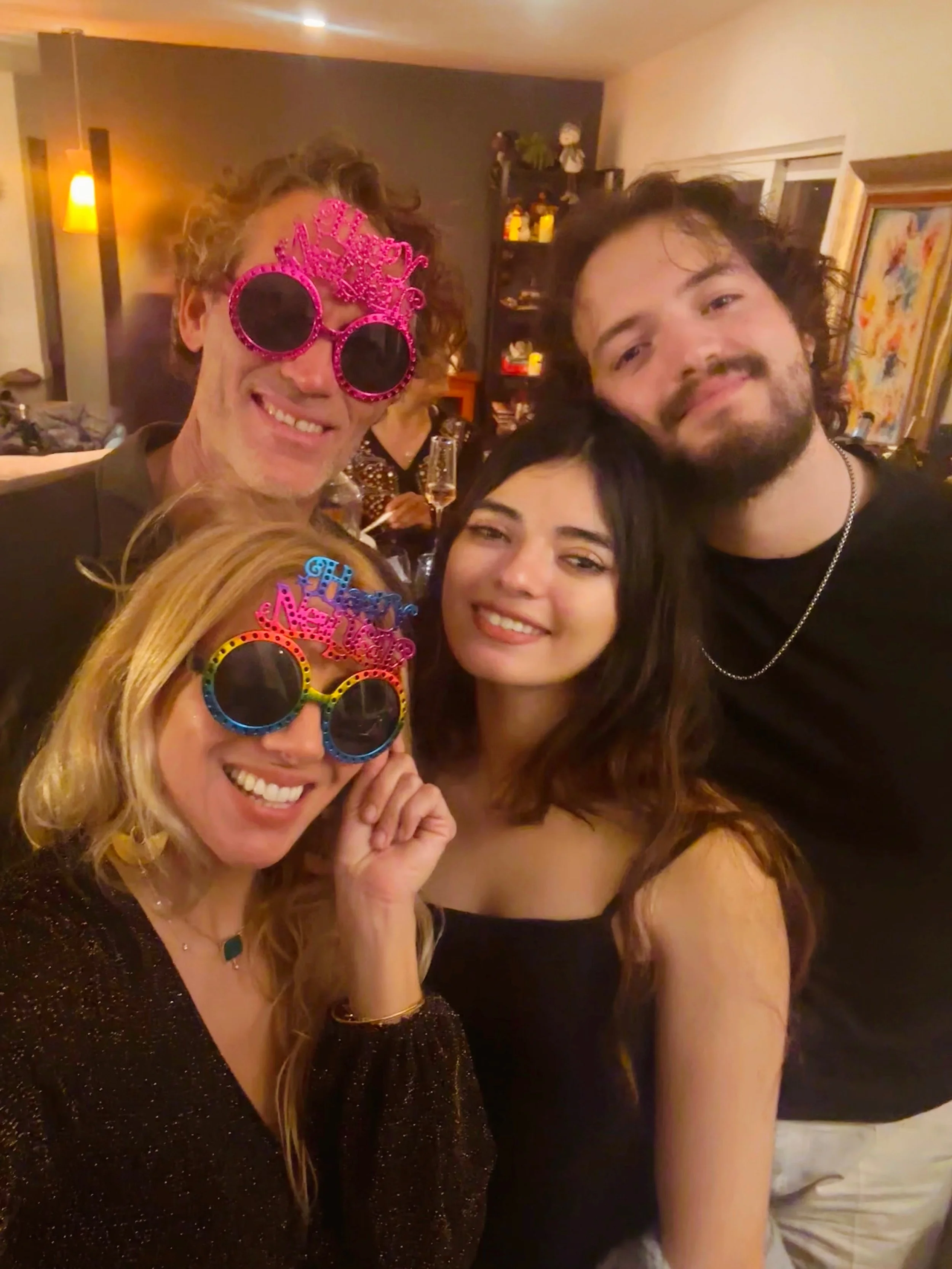
A couple weeks ago, I started going to Salsa classes with my sweetie, Adela, and her family.
They're Ecuadorian, which means that at any celebration, dancing is inevitable, so we decided to get some lessons and learn some new moves.
The thing that I love the most about hanging out with her extended family is that it is the norm to have 3-4 generations all dancing, laughing, finding the rhythm together.
Sometimes the kitchen, where the food was prepared, turns into the dance floor. Even the teenagers put down their phones and dance for hours. It's a pretty special thing to be a part of.
Yoga Is Like Dancing (And Your Brain Loves Both)
As I was reflecting after one of the lessons, a thought popped into my mind:
Yoga is like dancing.
What I mean by that is that they're both what cognitive health scientists call dual-task exercise.
Translation: it is not just good fun—it is one of the most comprehensive ways available to you to stimulate and nourish your brain.
You're remembering the steps
You're responding to your partner
You're following rhythm changes
You're coordinating with others in a group
This is so good for brain health because of the way that you're engaging with the activity. (Not to mention it's fun and sweat-inducing, which brings in a whole host of other benefits, too.)
There’s actually quite a bit of research showing that dual-task movement—where physical activity is combined with social engagement and cognitively demanding elements—supports:
Executive function
Attention
Neural connectivity as we age

Scott and Adela getting their “steps” in recently at a Cumbia/Salsa/Electronica set DJ’d by Nicola Cruz from Ecuador
Why this is powerful for brain health:
When you practice this way, it develops working memory, attention control, and coordination at the same time, asking the brain to manage multiple streams of information simultaneously.
So, yes, dancing and yoga are fun and great ways to incorporate movement into your days. But they're also so much more than that.
Every yoga class we host inside Thriving Mind is a comprehensive experience designed to strengthen the brain by activating multiple different systems at once:
Coordination and balance;
Memory and attention;
Nervous system regulation;
Precision work with hands and feet;
Neuromuscular exercises;
Practices that increase Nitric oxide production to help oxygenate and improve brain circulation;
Mantra practices;
And cognitive resilience
The hands and feet occupy a disproportionately large share of the brain's sensory and motor cortex — a phenomenon famously illustrated by the "cortical homunculus."
Though they represent a small fraction of body mass, the fingers and toes alone account for roughly one-third of the motor cortex and an enormous share of the somatosensory cortex.
This means that when you consciously engage them — pressing your palms into a mat, stretching your fingers and toes, or performing a deliberate hand positions and sequential motions — you are lighting up vast neural real estate that passive or inattentional movement simply doesn't activate to the same degree.
Conscious, patterned hand and foot movements trigger bilateral brain engagement, recruiting both hemispheres simultaneously.
Research on finger exercises shows that deliberate, mindful hand coordination activates neuroplasticity mechanisms — including BDNF (brain-derived neurotrophic factor) release — that support memory, attention, and executive function.
While walking or running on a treadmill are great, especially if you do them with friends, they don't necessarily reach the level of being a dual-task exercise, unless you are engaged in more than one way.
The mindful quality of the movement is what separates yoga from rote exercise: focusing on exactly how a hand is pressing or a foot is rooting demands attentional control, which in turn trains the prefrontal and parietal networks underlying working memory.
So, I'd love to hear...is your yoga practice like dancing?