
Your Sense of Smell May Be One of the Earliest Signals of Brain Health
Your nose is more than a way to enjoy the salty air coming off the bay or the fresh scent of jasmine blossoms. It's actually an early messenger for the brain.
Science shows that a fading sense of smell can be an early sign of cognitive decline, and it can often appear years before memory symptoms.
Dr. Ram Rao, Principal Research Scientist for Apollo Health, even says this:
"This discovery positions the sense of smell and olfactory function as more than a casual check — it could become a cornerstone of early AD screening."
If you're familiar with Āyurveda, this shouldn't come as a surprise. Each sense is a gateway to the mind, and smell is directly linked to memory.
When you work to strengthen your sense of smell, you're also:
Nourishing your brain
Building grey matter
Protecting your memory
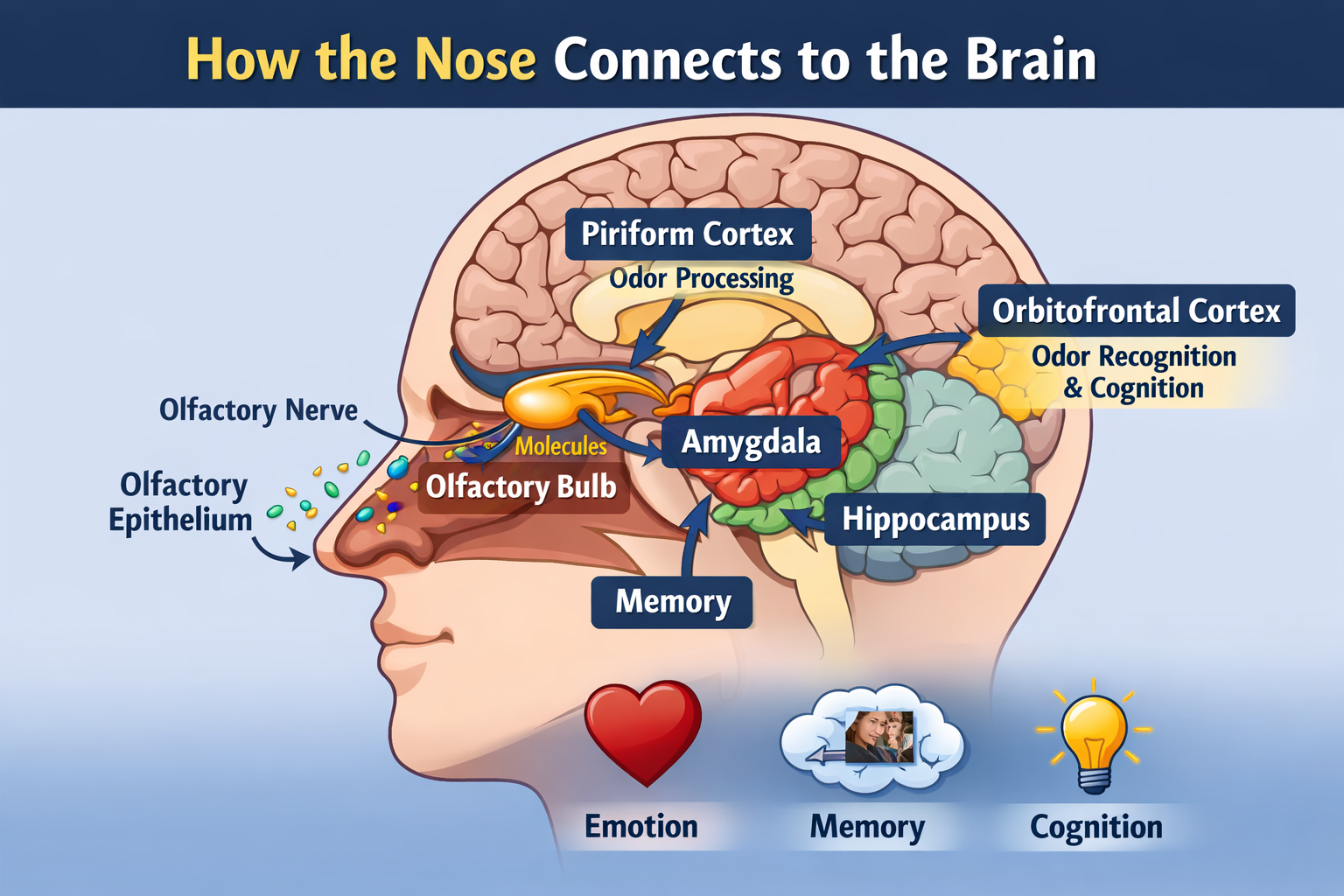
Here's what the science says:
#1. Olfactory training can improve your memory.
Studies show that practicing with distinct scents (like lemon, rose, clove, eucalyptus) can strengthen verbal memory and even enlarge brain regions tied to smell and cognition.
#2. Nighttime scent exposure boosts cognition.
One study had older adults sleep with a diffuser cycling different scents each night. After six months, they showed better memory scores and healthier brain connectivity compared to controls.
#3. Regular practice may protect brain volume.
MRI scans suggest people who engage in scent training maintain more grey matter in memory-related regions, a key factor in slowing cognitive decline.

Here’s how those research-backed tips translate through the lens of Āyurveda:
Keep essential oils like peppermint, rosemary, lavender, and eucalyptus in vials near your nightstand
Address sinus inflammation or difficulty breathing through your nose
Lubricate your nose with sesame oil to keep the airway clear and to trap inhalant pathogens and environmental pollutants
This article is part of our guide:
How to Protect Your Brain From Cognitive Decline