
The Science of Ghee
For thousands of years, ghee — also known as clarified butter — has been revered in Āyurveda as a deeply nourishing food. Classical texts describe it as supportive to the tissues, soothing to the digestive system, and beneficial for overall vitality.
Today, modern research is helping explain why this traditional fat has endured.
Ghee contains bioactive compounds that support the gut, regulate inflammation, and provide stable fuel for the brain — all pillars of long-term cognitive health.
If you’re looking for simple, food-based ways to support your brain and nervous system, ghee is one of the most powerful upgrades you can make in your kitchen.
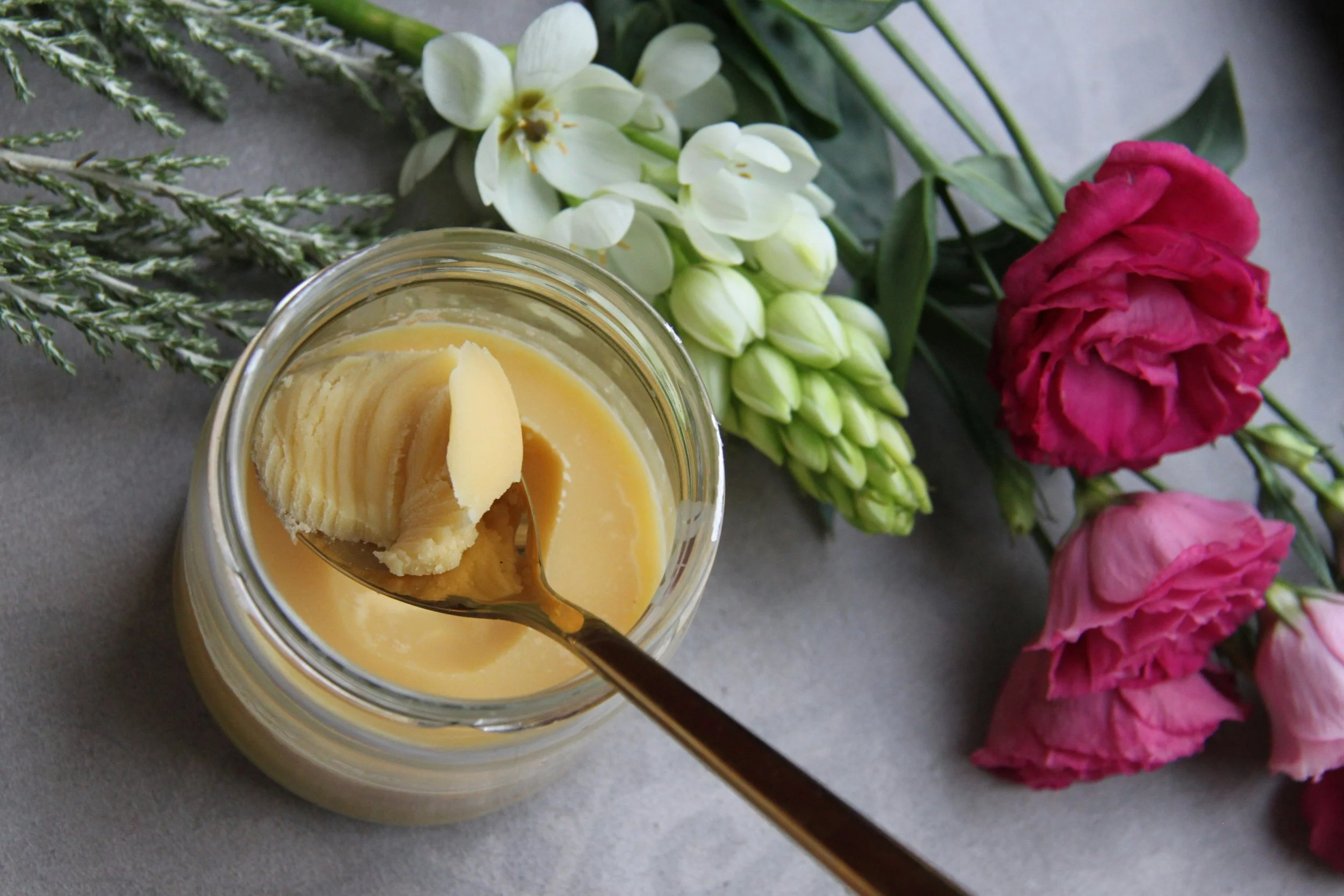
What Is Ghee?
Ghee is made by gently heating butter until the water evaporates and the milk solids separate. What remains is a pure, golden fat with a rich flavor and high smoke point.
Because the lactose and casein are removed during the process, many people who are sensitive to dairy tolerate ghee well (though anyone with a true dairy allergy should avoid it).
In the Āyurvedic tradition, ghee is considered a carrier substance — meaning it helps deliver nutrients deeper into the tissues.
Charaka, one of Āyurveda’s most respected classical physicians, wrote that ghee:
“Alleviates pitta and vāta, softens tissues, and improves complexion and voice.”
While the language differs from modern medicine, the underlying concept is familiar: healthy fats are essential for cellular resilience and nervous system function.
Why Ghee Matters for Brain Health
Your brain is nearly 60% fat, and the quality of fats you consume directly influences:
Cell membrane integrity
Neurotransmitter signaling
Inflammation levels
Hormone production
Mitochondrial function
Ghee provides several compounds that make it uniquely supportive.
1. Butyrate: Fuel for the Gut–Brain Axis
Ghee is one of the richest dietary sources of butyrate, a short-chain fatty acid that plays a critical role in:
Maintaining the gut lining
Reducing systemic inflammation
Supporting immune regulation
Influencing mood through the gut–brain connection
Because inflammation and metabolic dysfunction are strongly linked to cognitive decline, foods that support gut integrity are foundational to brain health.
Think of butyrate as a signaling molecule that tells the body: we are safe, nourished, and regulated.
2. Pentadecanoic Acid: A Newly Recognized Essential Fatty Acid
Emerging research has identified pentadecanoic acid (C15:0) as an important fatty acid associated with metabolic and cellular health.
Higher circulating levels have been linked to:
Improved mitochondrial function
Healthier lipid profiles
Better blood sugar regulation
Reduced inflammation
While research is ongoing, nutrients like C15:0 reinforce an important clinical principle:
👉 Whole foods often contain protective compounds we are only beginning to understand.
3. Fat-Soluble Vitamins That Actually Absorb
Grass-fed ghee naturally contains vitamins:
A
D
E
K
Because these vitamins are fat-soluble, consuming them within a whole fat matrix dramatically improves bioavailability compared to many synthetic supplements.
Food first is not just philosophy…it is physiology.
Why Quality Matters
Ghee is highly concentrated. That means it concentrates both nutrients and potential toxins.
For the greatest therapeutic value, choose:
✅ Organic
✅ Grass-fed
✅ Unsalted
✅ Ideally cultured
Cows raised on pasture produce milk with a more favorable fatty acid profile and higher levels of fat-soluble vitamins.
When possible, sourcing matters as much as the food itself.
How Much Ghee Should You Consume?
For most healthy adults:
👉 1–3 teaspoons per day is a reasonable starting point.
Some individuals may benefit from more, while others — particularly those with certain lipid disorders — should consult their healthcare practitioner before increasing saturated fat intake.
As with any nutritional strategy, personalization is key.
Your metabolism, genetics, digestive strength, and overall health picture all influence what is ideal for you.
Is Ghee Right for Your Constitution?
Āyurveda teaches that no single food is perfect for everyone.
Traditionally, ghee is considered especially supportive for individuals with vāta and pitta tendencies due to its warming, stabilizing qualities.
However, the most important data point is always your lived response.
Pay attention to:
Digestion
Energy
Mental clarity
Satiety
Your body is remarkably communicative when you learn how to listen.
How to Make Ghee at Home
While high-quality store-bought ghee is widely available, many people enjoy preparing it themselves. The process is simple — though it requires patience.
You’ll need:
2 pounds *unsalted* butter
a deep pot with a thick bottom
a stove top that can sustain a low, consistent heat
a medium sized spoon
a spatula (optional but convenient)
a ladle (optional but convenient)
a medium sized sieve/strainer
24” x 6” (minimum) square of cheesecloth, folded over on itself at least 4 times so that you have 4 layers of cheesecloth measuring 6” x 6” making sure that it covers your strainer or sieve
a medium sized bowl, larger than the sieve/strainer
a clean, dry, sterilized 16-ounce glass jar with a lid for each pound of butter
Instructions:
Heat the butter on low until the butter bubbles and froths. The froth and and snap-crackle-pop sound indicates water boiling off. That’s good!
Continue cooking the butter on low until it becomes a translucent gold color and the smell is reminiscent of popcorn. **Mind the butter carefully at this point and beyond, this is the most likely time it will burn.**
Tiny white balls will form and sink to the bottom of the pan, that’s the milk solids separating out.
Once the milk solids become light to medium brown, turn off the heat.
Allow the ghee to cool to a temperature that you’re comfortable handling.
Place the cheesecloth into the sieve, and rest the sieve in the bowl.
Using the ladle to slowly pour the liquid through the cheesecloth. Use the spatula to scrap the pot.
Once all the liquid is strained through the cheesecloth and strainer, pinch the edges of the cheesecloth together. Lift the cheesecloth out.
With one hand holding the edges closed, use the other hand to squeeze the cheesecloth wrapped around the milk solids gently, being careful not to squeeze any of the milk solids out of the cheesecloth.
Discard the milk solids and cheesecloth.
Pour ghee into glass jar and store in a cool, dark place.
Properly prepared ghee is shelf-stable and can last for months without refrigeration.